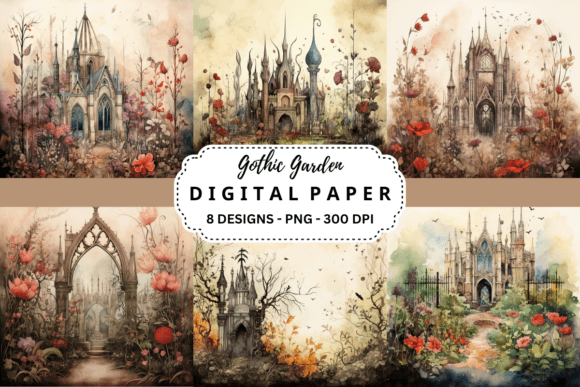
Watercolor Gothic Garden Backgrounds: A Designer's Asset
In the search for a truly distinctive visual element, many creative projects hit a wall. They need a background that offers depth, mood, and a handcrafted feel without overwhelming the core message. This is where a resource like the Watercolor Gothic Garden Backgrounds collection enters the conversation. It's not just a set of images; it's a versatile design toolkit packaged as eight individual, high-resolution PNG files. Each file delivers a massive 3600 x 3600 pixel canvas at 300 DPI, making it a serious asset for both digital and print-focused work.
The visual personality of these backgrounds is a compelling blend of organic artistry and structured elegance. You'll find the fluid, unpredictable washes of watercolor pigment meeting the intricate, often symmetrical forms of gothic architectural and floral motifs. Think of rich, moody color palettes—deep plums, aged greens, and weathered golds—layered with fine-line illustrations of wrought iron gates, pointed arches, and climbing ivy. The overall appeal lies in this juxtaposition: it feels both timeless and artistic, structured yet alive. It provides a sophisticated texture that suggests history and craftsmanship, perfect for projects that need to convey depth and narrative.
Where These Backgrounds Truly Shine
Understanding the practical applications of such a resource is key to its value. For social media graphics, these backgrounds can transform a standard post into a captivating piece of visual storytelling. A fashion brand might use a subtle, textured version behind a product shot to create a moody, editorial feel. A publisher promoting a fantasy or historical novel could use a more detailed background to set the tone for the story's world. The high resolution ensures they look crisp on any screen, from Instagram to Pinterest.
Beyond the digital realm, the utility extends far into print on demand design projects and physical products. Imagine these patterns on the endpapers of a journal, the wrapping paper for a boutique gift, or the backdrop for a wedding invitation suite. The 300 DPI quality is non-negotiable for professional printing, ensuring sharp details and rich color reproduction on paper, fabric, or packaging. For scrapbooking and poster & banner design, the files provide a ready-made, high-quality foundation that saves hours of creation time. The invitations card market, particularly for events like gothic-themed weddings, fantasy book launches, or immersive theater productions, finds an immediate and perfect fit in this aesthetic.
Integrating the Aesthetic: Practical Guidance
Choosing the right background is only the first step; integrating it effectively is what elevates a design. When working with a visually rich asset like a Watercolor Gothic Garden Background, consider it the primary design asset that sets the entire mood. Your typography and other graphic elements should complement, not compete with it.
For font pairing, the goal is balance. The ornate, historical nature of the background often pairs well with clean, modern sans serif fonts for body text, ensuring readability. For headlines, a classic serif font or even a carefully chosen script font can echo the background's elegance. Avoid using overly decorative or handwritten fonts for large blocks of text, as they can become lost in the texture. Always test your text overlays on the background at the final size to check contrast and clarity.
From a brand identity perspective, these backgrounds can be a powerful tool for establishing a specific niche. A small business selling artisanal teas, hand-bound books, or vintage-inspired clothing could use these backgrounds consistently across their web design elements, packaging design, and social media graphics to build a recognizable, cohesive aesthetic. This consistency builds professionalism and audience recognition. The key is to use the background as a consistent element within your visual hierarchy, allowing it to support the main message without stealing focus. When used thoughtfully, these backgrounds do more than fill space; they contribute to brand perception, telling a story of quality, detail, and artistic sensibility before a single word is read.